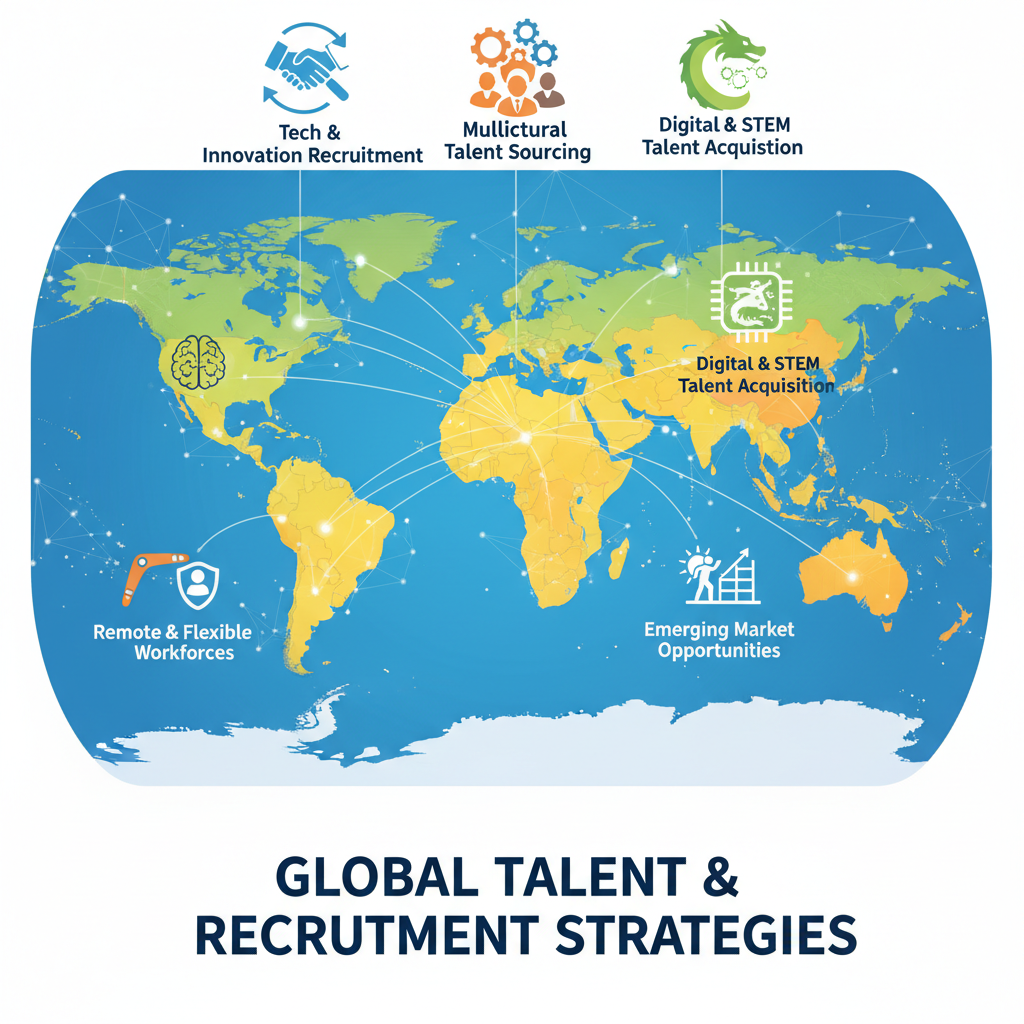
Scaling Globally: Strategic Staffing and Organizational Approaches for International Market Entry
By Mercier Team
Scaling Globally: Strategic Staffing for International Market Entry
In today’s fast-paced business environment, international expansion is no longer a luxury but a necessity for companies seeking sustainable growth. As firms transition into new markets, the importance of strategic staffing and *business expansion* cannot be overstated. This article explores effective recruitment strategies, industry trends, and the advantages of outsourcing, particularly within the European landscape.
The Importance of Strategic Staffing in International Markets
When entering a new market, it is crucial for organizations to align their recruitment strategies with their expansion objectives. The right talent can make the difference between success and failure. According to a recent survey by Deloitte, 53% of companies cited talent acquisition as their top challenge when entering international markets. This highlights the need for tailored *staffing solutions* that address local market nuances while supporting global ambitions.
Understanding Local Markets
Each country has unique cultural, legal, and economic factors that influence recruitment practices. For instance, the recruitment landscape in Europe varies widely between the Nordic countries and Southern Europe. HR professionals must conduct thorough research to understand local competencies, employment laws, and cultural expectations. Such knowledge not only facilitates effective *talent acquisition* but also enhances employee engagement and retention in new regions.
Outsourcing Benefits for Efficient Expansion
Outsourcing certain HR functions can provide significant advantages during international expansion. By partnering with local recruitment agencies or outsourcing firms, companies can tap into established networks and gain insights that drive business success. Eurofound reported that 33% of companies implementing outsourcing strategies noted an increase in operational efficiency.
Cost-Effectiveness and Scalability
Outsourcing not only reduces overhead costs associated with in-house recruitment but also offers the flexibility to scale operations based on market demands. For instance, during the rapid expansion by tech firms in Eastern Europe, these organizations traditionally relied on local firms for quick and efficient hiring processes. This approach allowed them to focus on their core business strategies while ensuring they had the right talent in place to meet evolving customer needs.
Implementing Effective Recruitment Strategies
Equipped with insights about the local market and outsourcing benefits, HR leaders need to design recruitment strategies that align with their global vision. Here are some actionable steps to consider:
- Utilize Data Analytics: Leverage data analytics tools to identify talent trends and skill gaps in target markets. This can provide valuable insights into effective *staffing solutions*.
- Build a Strong Employer Brand: A compelling employer brand can attract top talent. Communicate your company’s mission, values, and successes to resonate with prospective candidates.
- Prioritize Diversity and Inclusion: Cultivating a diverse workforce can enhance creativity and adaptability. Ensure that your recruitment strategies prioritize diversity to better reflect the local demographics.
- Engage with Local Networks: Building relationships with local industries and recruitment platforms can yield insights into effective hiring practices and cultural nuances.
Leveraging Technology
Technology plays a pivotal role in enhancing recruitment processes for international expansion. Implementing advanced Applicant Tracking Systems (ATS) and leveraging AI technologies can streamline candidate screening and enhance the overall efficiency of hiring workflows. Companies that incorporate technology into their recruitment process can reduce time-to-hire by 30-50%, making it an invaluable asset in a competitive landscape.
Trends Influencing Staffing Solutions in Europe
The European recruitment landscape is constantly evolving, and business leaders must stay informed of key trends driving staffing solutions. Some notable trends include:
- Increased Remote Work: The shift to remote work has led to a wider talent pool, enabling companies to hire skilled individuals regardless of geographic location.
- Gig Economy Growth: The rise of freelancers and contractors offers flexibility in workforce management. Many companies are integrating gig workers into their staffing strategies to enhance agility.
- Focus on Employee Wellbeing: Companies are prioritizing employee wellbeing and mental health as a critical component of talent management, resulting in improved retention rates and company culture.
Conclusion
As businesses pursue international expansion, the effective alignment of recruitment strategies and staffing solutions is imperative. By leveraging insights into local markets and embracing outsourcing benefits, companies can optimize their talent acquisition processes and set the stage for sustainable growth. Through actionable strategies and an understanding of current industry trends in Europe, HR professionals can play a pivotal role in driving organizational success in the global marketplace.