Moving to Sofia: A Practical Guide for Living and Working in Bulgaria
By Mercier Team
Living in Sofia means access to a capital city where your monthly expenses, including a central apartment and frequent dining out, often total between 900 and 1,300 euro. The city operates on a blend of Slavic tradition and modern infrastructure, making it a frequent choice for professionals seeking a high quality of life without the high costs found in Western Europe.
What it actually costs to live in Sofia
Rent for a modern, one-bedroom apartment in the city center typically ranges from 450 to 700 euro, while apartments further out cost between 300 and 500 euro. Monthly utilities for electricity, heating, water, and internet usually add another 100 to 150 euro depending on the season.
Groceries for one person average 200 to 300 euro per month if shopping at supermarkets like Billa or Kaufland. Eating out is very accessible, with a decent lunch menu or a meal at a casual restaurant costing between 7 and 12 euro. A monthly pass for all public transport is roughly 25 euro.
Where people live
Lozenets is the most sought-after neighborhood for expats due to its proximity to the city park, Borisova Gradina, and its concentration of cafes and bistros. It is quiet, upscale, and walkable.
Students and younger professionals often prefer Studentski Grad, which is more budget-friendly and vibrant, though significantly further from the historic center. Mladost is a popular choice for those working in the city's tech business parks, offering modern residential complexes and easy access to the metro line.
Getting around
Sofia has an extensive public transport network consisting of trams, buses, trolleybuses, and a clean, efficient metro system. The metro is the most reliable way to cross the city, with lines connecting the airport directly to the center in about 30 minutes for less than 1 euro.
The Moovit app is essential for real-time tracking of schedules. Taxis are abundant and inexpensive, though it is standard practice to use apps like Yellow! or TaxiMe to ensure fair pricing and transparent routes.
The working culture
The business environment in Sofia is heavily defined by multilingual service centers and international business process outsourcing companies. These roles often require native-level fluency in a second language alongside conversational English.
Employers generally expect a professional demeanor, reliability, and the ability to navigate complex digital tools. The office culture is often international, with teams composed of people from all over Europe, which makes it easy to integrate socially. Contracts are formal and usually follow the Bulgarian Labor Code, providing standard protections and benefits.
The paperwork nobody warns you about
Upon arrival, you must register your address at the local Migration Office within 72 hours, which requires a copy of your rental contract. Once registered, you obtain a long-term residence card, a mandatory step for any stay exceeding three months.
With your residence card in hand, you can visit the National Revenue Agency to obtain a tax number. You will also need a local bank account for your employer to process payments. Finally, ensure your European Health Insurance Card is active or secure private health insurance, which is affordable and widely used to skip queues at private clinics.
Daily life, food and the international community
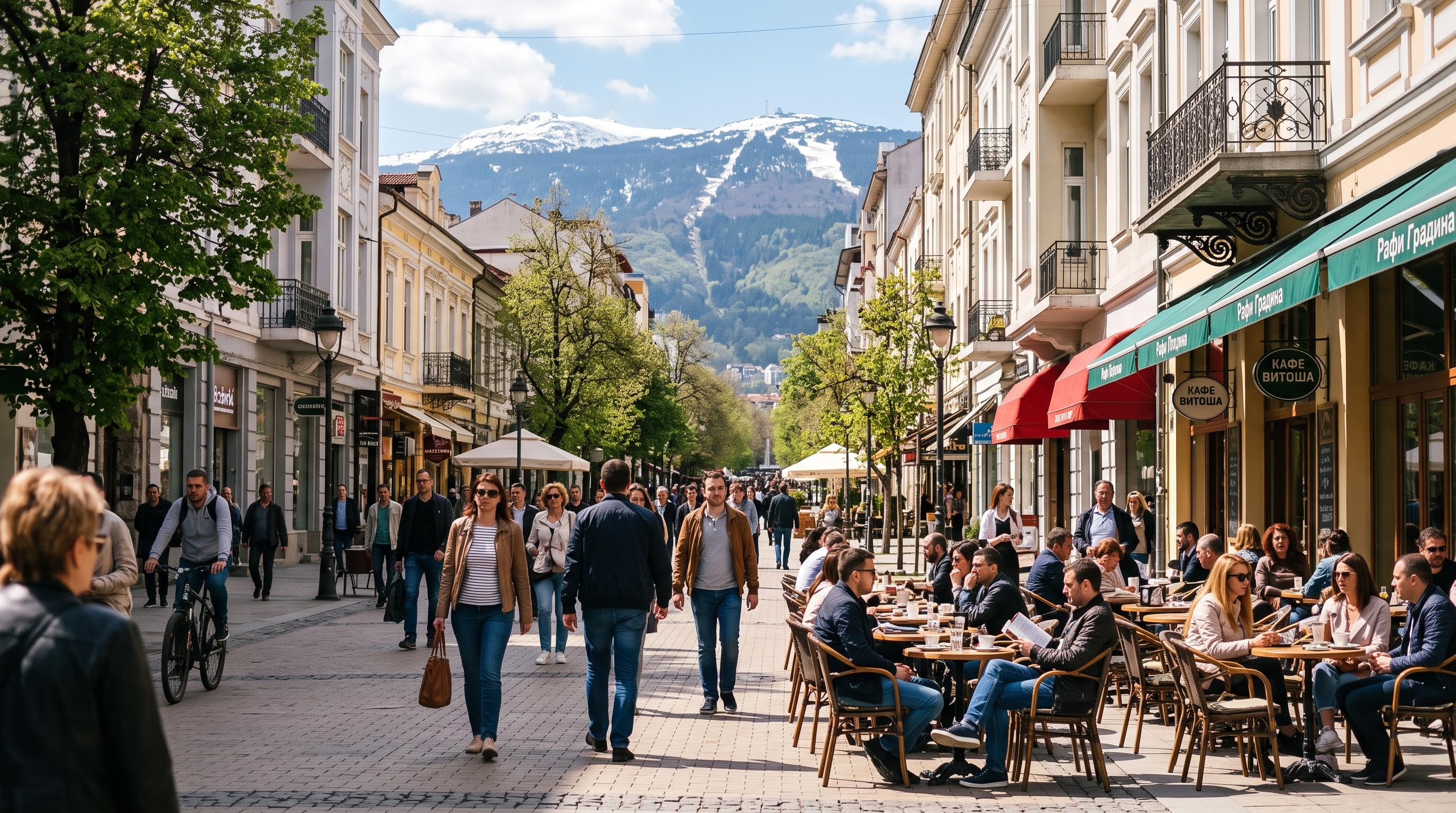
A typical week often involves working from modern offices located in the city's business districts and spending evenings at the cafes around Vitosha Boulevard. The international community gathers at language exchange meetups, sports clubs, and cultural events held at centers like the Sofia City Library.
The climate is continental, with hot, sunny summers and cold, snowy winters. Spring and autumn are brief but pleasant. Food culture is heavy on grilled meats, fresh salads, and dairy, with many local markets selling high-quality produce at a fraction of the cost of Western chains.
Who thrives here, and who does not
You will thrive in Sofia if you are patient with local administration, enjoy outdoor activities like hiking on Vitosha Mountain, and appreciate a slower pace of life than that of Paris or London. The city is ideal for those who enjoy building a community from scratch and value financial flexibility.
You may struggle if you demand seamless, digitized government services or if you find the Cyrillic alphabet and the language barrier intimidating. It requires an open mind to adapt to the local way of doing things, which can occasionally feel slow or non-standard compared to major Western capitals.
Moving to a new country is a significant step, and finding the right environment for your professional career is the first part of that journey. Explore the current openings in international teams to see if your language skills match the needs of the growing firms based in Sofia.
Jobs we are hiring for in Sofia right now
These are live positions from our own portfolio, with relocation support and paid accommodation packages on many of them. Tap any role to see the full details and apply.
-
Italian Speaking Customer Support for Online Streaming Service – Work In Sofia, Bulgaria
Sofia, Bulgaria · Italian language
-
Italian Speaking Customer Support for Social Media – Work In Sofia, Bulgaria
Sofia, Bulgaria · Italian language
-
Italian Speaking Customer Support for Online Travel Agency – Work In Sofia, Bulgaria
Sofia, Bulgaria · Italian language
-
Italian Speaking Customer Support for Banking – Work In Sofia, Bulgaria
Sofia, Bulgaria · Italian language
-
Italian Speaking HealthTech Support Specialist – Work In Sofia, Bulgaria
Sofia, Bulgaria · Italian language
-
Italian Speaking Airline Customer Service Agent – Work In Sofia, Bulgaria
Sofia, Bulgaria · Italian language
Nothing that fits your language yet? New roles open every week, so it is worth checking our full job board or the relocation guide for Sofia.