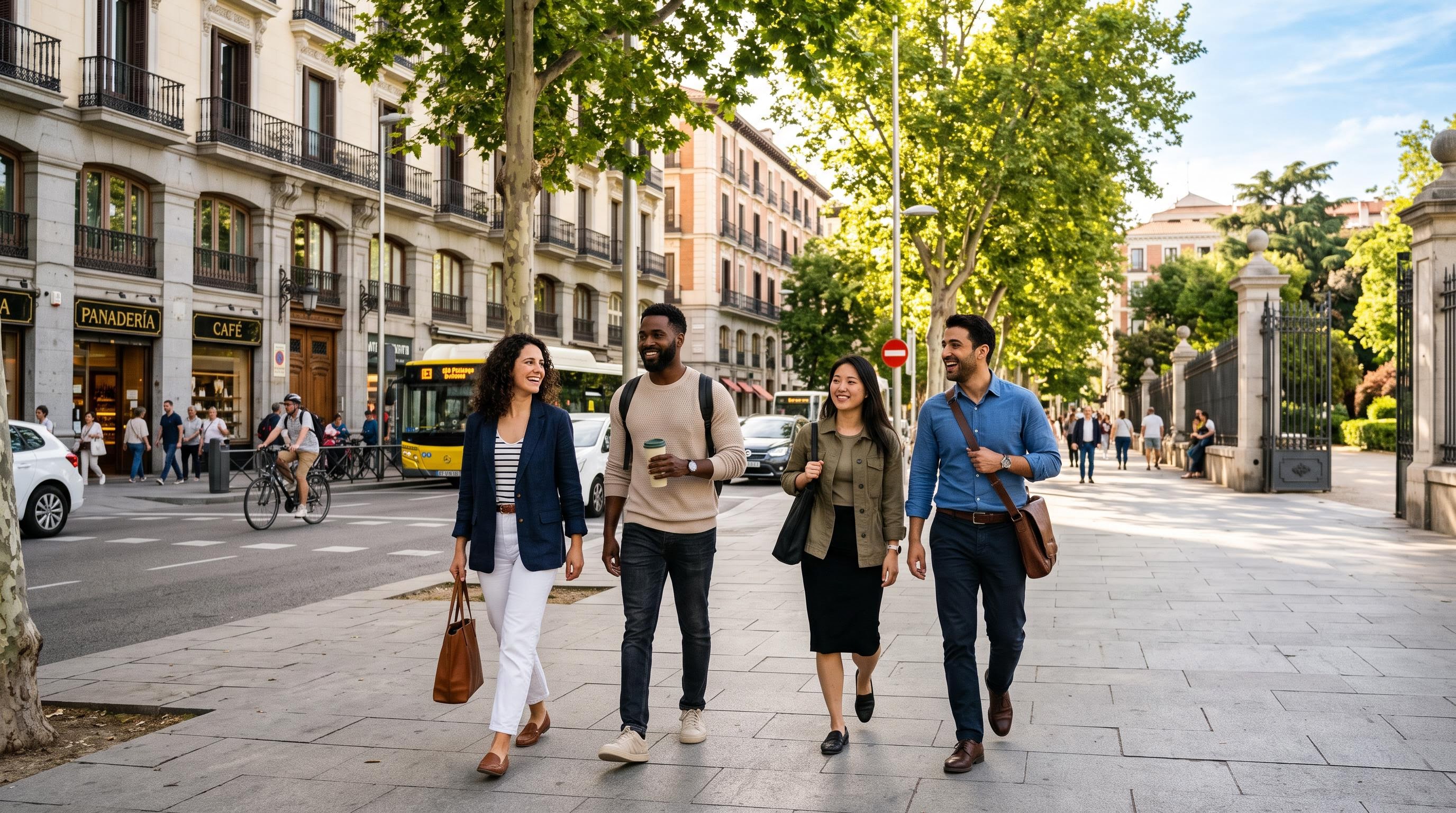
Moving to Madrid requires a monthly budget of between 1,500 and 2,200 euros to maintain a comfortable standard of living, covering rent, utilities, food, and social activities. While housing demand remains high, understanding the local administrative flow and neighborhood nuances can make your relocation significantly smoother.
What it actually costs to live in Madrid
Rent is the largest expense, with a one-bedroom apartment in a central area costing between 900 and 1,300 euros per month. Outside the city center, you can find similar spaces for 700 to 950 euros.
Utilities including electricity, water, and gas typically add 120 to 180 euros to your monthly outgoings. Groceries for a single person average 250 to 350 euros, though this varies depending on how often you shop at local markets versus larger supermarket chains.
Dining out is an accessible luxury, with a menu del dia—a standard three-course lunch—costing between 12 and 16 euros in most neighborhoods. Transport remains affordable due to government-subsidized monthly travel passes that cover the entire city network.
Where people live
Malasana is the epicenter of youth culture, independent boutiques, and late-night bars, making it ideal for those who prioritize a short commute and high energy. The streets are narrow and historical, often lacking elevators in older buildings.
Chamberi offers a more traditional, upscale experience with wide avenues and classic architecture. It is quieter than the center but remains within walking distance of major transit hubs, attracting professionals who prefer a balanced lifestyle.
Arganzuela, particularly near the Madrid Rio park, has become a favorite for those wanting green space and modern facilities. It is well-connected to the business districts and offers a slightly more spacious living environment than the dense city center.
Getting around
Madrid has one of the most efficient metro systems in Europe, consisting of 12 lines that cover almost every corner of the city. A monthly Abono Transportes pass covers unlimited travel on the metro, buses, and light rail for roughly 20 to 30 euros depending on the zone.
The city is highly walkable, though the BiciMAD bike-sharing scheme is useful for faster cross-town transit. For airport transfers, the Cercanias train line C-1 connects directly from the city center to Barajas Airport in about 30 minutes, costing less than 3 euros per trip.
The working culture
Multilingual customer service and BPO roles often require native-level proficiency in your target language alongside a conversational level of English or Spanish. These positions typically involve shift work, including nights and weekends, given the global nature of the companies operating from Madrid.
Employers value punctuality and reliability, and the workplace environment is generally collaborative with a strong focus on team integration. Most contracts follow standard Spanish labor laws, which mandate a certain number of vacation days and provide clear legal protections for employees.
The paperwork nobody warns you about
The first step is obtaining a NIE, the Foreigner Identity Number, which is essential for every legal transaction in Spain. You must apply for this at a police station or consulate, often requiring an appointment secured weeks in advance.
Once you have a fixed address, you must register yourself at the local town hall, a process known as Empadronamiento. This document is required to access public healthcare services and register for a social security number.
After these are secured, you can open a local bank account, which is necessary for setting up direct debits for utilities. Carry physical copies of all documents, as digital versions are frequently not accepted at government offices.
Daily life, food and the international community
Life in Madrid revolves around the late schedule, with dinner rarely starting before 9:00 PM. Summers are intense, with temperatures frequently exceeding 35 degrees, leading residents to prioritize early morning activities and late evening social gatherings.
International communities often gather in areas like Retiro or around the university districts. Language exchange meetups, hosted in bars throughout the city, are the most common way to meet both locals and fellow expatriates.
Who thrives here, and who does not
Those who enjoy an outdoor, social lifestyle and are patient with administrative processes will find Madrid rewarding. The city rewards people who are willing to embrace the local pace and invest time in learning basic Spanish, regardless of their workplace language.
Conversely, those who require absolute efficiency from government services or who struggle with late-night noise may find the city challenging. Success here is usually tied to a willingness to adapt to a culture that prioritizes social connection over strict adherence to rigid routines.
If you are considering a move to Spain, researching the specific requirements of international companies is the best next step. Reviewing current opportunities in the Danish or Dutch-speaking sectors can give you a clearer picture of what to expect when you arrive.
Jobs we are hiring for in Madrid right now
These are live positions from our own portfolio, with relocation support and paid accommodation packages on many of them. Tap any role to see the full details and apply.
-
Danish Speaking Live Casino Presenter – Additional Freelance Recruitment Opportunity – Work In Madrid, Spain
Madrid, Spain · Danish language
-
Danish Speaking Online Casino Host & Freelance Recruitment Partner – Work In Madrid, Spain
Madrid, Spain · Danish language
-
Danish Speaking Casino Presenter with Freelance Recruitment Opportunities – Work In Madrid, Spain
Madrid, Spain · Danish language
-
Danish Speaking Casino Host & Freelance Talent Scout – Work In Madrid, Spain
Madrid, Spain · Danish language
-
Danish Speaking Live Casino Host & Freelance Recruiter – Work In Madrid, Spain
Madrid, Spain · Danish language
-
Dutch Speaking Live Casino Presenter – Additional Freelance Recruitment Opportunity – Work In Madrid, Spain
Madrid, Spain · Dutch language
Nothing that fits your language yet? New roles open every week, so it is worth checking our full job board or the relocation guide for Madrid.