Living in Athens: A Practical Guide for International Professionals
By Mercier Team
Living in Athens as a foreign professional means balancing the ease of a Mediterranean lifestyle with the reality of slow-moving bureaucracy. While the city offers a high quality of life, understanding the practical steps of settling in—from securing a rental to mastering the transport grid—is essential for a smooth transition.
What it actually costs to live in Athens
Life in Athens is generally affordable compared to major European capitals, though inflation has shifted rental prices upward. A one-bedroom apartment in a central but non-touristy neighborhood typically ranges from 500 to 800 euros per month. Utilities including electricity, water, and heating for a single person generally cost between 150 and 250 euros monthly, depending heavily on air conditioning usage during the summer.
Groceries for a single person average 250 to 350 euros per month when shopping at local markets and standard supermarkets. Eating out is a cultural staple; a simple souvlaki wrap costs about 4 euros, while a mid-range meal for two with house wine typically lands between 30 and 45 euros. A monthly public transport pass provides unlimited access for 27 euros.
Where people live
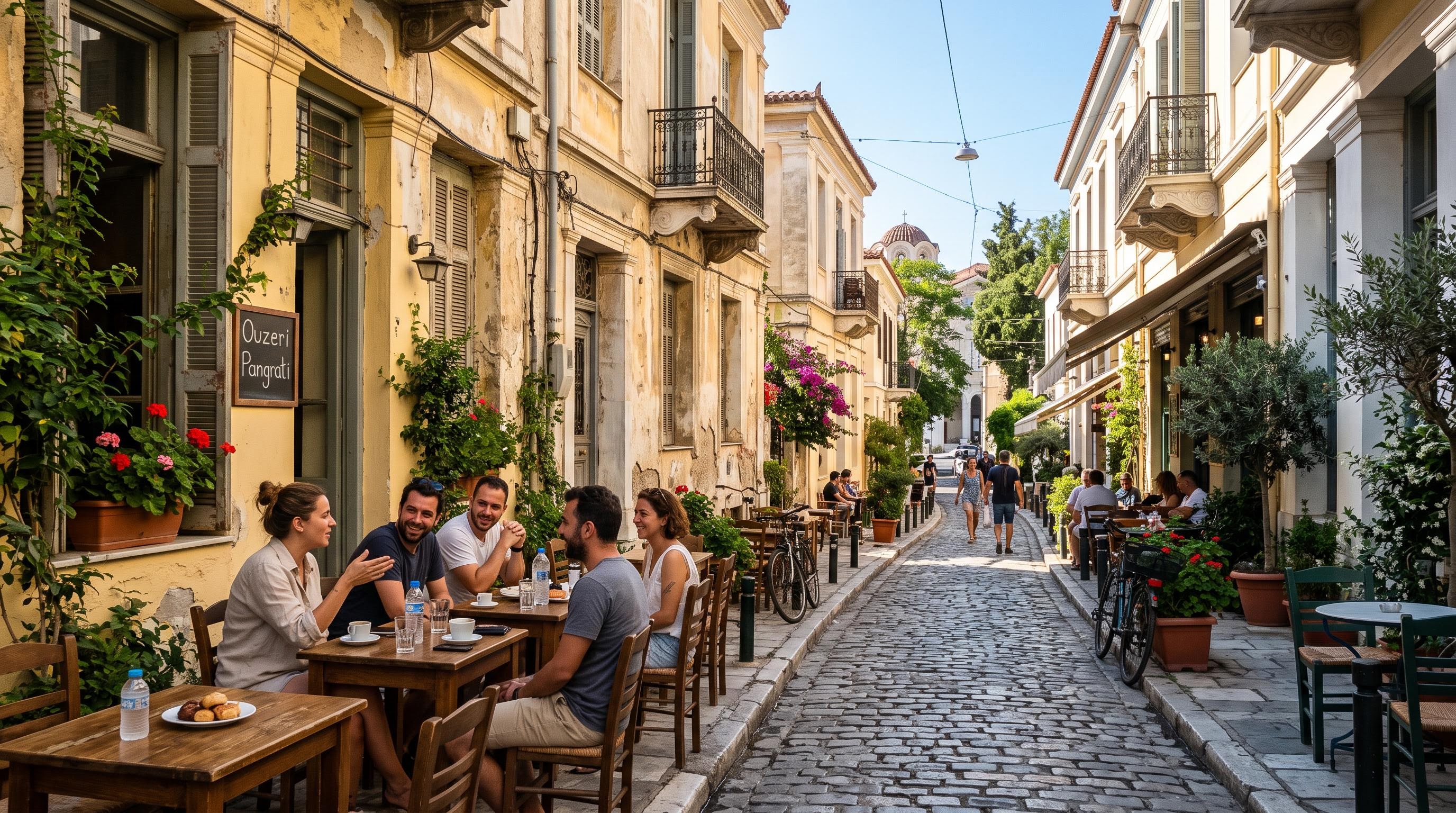
Pangrati is highly favored by international workers for its central location, vibrant cafe culture, and proximity to the Panathenaic Stadium. It offers a mix of historic charm and modern amenities that cater well to long-term residents. Koukaki, located near the Acropolis, remains popular for its pedestrian-friendly streets and access to the city’s major archaeological sites.
Kallithea is a practical, more residential choice that offers better value for money while remaining close to the coast and the city center via efficient tram and bus lines. Exarchia attracts those looking for a grittier, creative atmosphere filled with independent bookstores, alternative bars, and student life.
Getting around
Athens has an efficient public transport network consisting of the Metro, tram, buses, and trolleybuses. The OASA Telematics app is the standard tool for tracking live arrivals and planning routes across the city. The Metro is the most reliable way to navigate peak-hour congestion.
The airport is connected to the city center via the Metro Line 3 and the suburban railway, with a one-way ticket costing 9 euros. For daily commutes, the integrated 30-day transport card is the most economical solution for any resident using the network more than once a day.
The working culture
In the multilingual customer support and BPO sector, companies look for native-level fluency in specific languages and a high degree of adaptability. The work is usually office-based or hybrid, focusing on high-volume interaction, ticket management, and troubleshooting. Employers prioritize communication skills, patience, and the ability to navigate internal software platforms.
The working environment is often fast-paced and international, with teams composed of people from across Europe and beyond. Contracts typically follow strict Greek labor laws, and while the atmosphere can be informal, there is a strong expectation of professionalism, punctuality, and target-driven results.
The paperwork nobody warns you about
The administrative process begins with obtaining an AFM, which is the Greek tax identification number. Without this, you cannot open a bank account or sign a rental contract. Once you have a job offer, you must visit a local tax office or use the online portal to register.
Next, you must secure a Social Security Number, known as the AMKA, which provides access to the public health system. Registering with a local municipality is the final step, though often the most time-consuming due to appointment backlogs. Always maintain physical copies of all documents, as Greek administrative offices still rely heavily on paper records.
Daily life, food and the international community
A typical week in Athens often revolves around outdoor socializing. Summers are intense, with temperatures frequently exceeding 35 degrees, leading residents to adopt a later daily schedule. Winters are mild but rainy, with temperatures rarely dipping below freezing in the city center.
The international community gathers in hubs like the cafes surrounding the Acropolis, the bars of Petralona, and various Facebook groups dedicated to expats in Greece. Local food culture is anchored in the seasonal cycle; tomatoes and fruits are best in summer, while hearty stews and legumes dominate winter menus. The city feels most alive in the late evening, when residents fill plazas to eat and talk.
Who thrives here, and who does not
Those who thrive in Athens are patient, flexible, and comfortable with a degree of chaos in daily life. If you enjoy a Mediterranean pace, social outdoor living, and are willing to learn the basics of the Greek language to navigate daily errands, the city rewards you with a rich cultural experience.
Conversely, those who require rigid efficiency, strictly predictable administrative processes, or a climate that does not reach extreme summer heat may find the adjustment period challenging. Success in Athens is largely defined by one's ability to roll with unexpected changes and appreciate the city’s unique historical texture.
As you consider your next career step, reviewing specific opportunities in the multilingual support sector can help you understand how your language skills align with current market demands. Exploring these roles is a good starting point for those ready to commit to life in Greece.
Jobs we are hiring for in Greece right now
These are live positions from our own portfolio, with relocation support and paid accommodation packages on many of them. Tap any role to see the full details and apply.
-
French Speaking Customer Happiness Specialist – Work Remote In Greece
Greece · French language
-
French Speaking Helpdesk Support Agent – Work Remote In Greece
Greece · French language
-
French Speaking Multilingual Support Representative – Work Remote In Greece
Greece · French language
-
French Speaking Support Center Analyst – Work Remote In Greece
Greece · French language
-
French Speaking Remote Support Specialist – Work Remote In Greece
Greece · French language
-
French Speaking Customer Experience Representative – Work Remote In Greece
Greece · French language
Nothing that fits your language yet? New roles open every week, so it is worth checking our full job board or the relocation guide for Greece.