Future-Proof Your Team: Long-Term Workforce Planning for Growth
By Mercier Team
Future-Proof Your Team: Long-Term Workforce Planning Strategies for Sustainable Growth
As the landscape of business evolves in the post-pandemic world, organizations must take a proactive approach to workforce planning. Long-term workforce strategies are not merely about filling current roles but about envisioning the future of work and aligning your team with strategic business objectives. In this blog post, we will explore how to future-proof your team through effective workforce planning, with a focus on strategic business value and industry trends specific to the European recruitment landscape.
The Importance of Workforce Planning
Workforce planning serves as the backbone of a business's strategy, especially in an ever-changing European market where the dynamics of talent acquisition and staffing solutions have shifted dramatically. According to a recent report by the European Commission, around 78% of companies highlighted talent shortages as a significant barrier to growth. This statistic underlines the pressing need for organizations to adopt forward-thinking workforce planning to ensure they can navigate the complexities of business expansion.
Key Trends Affecting Workforce Planning
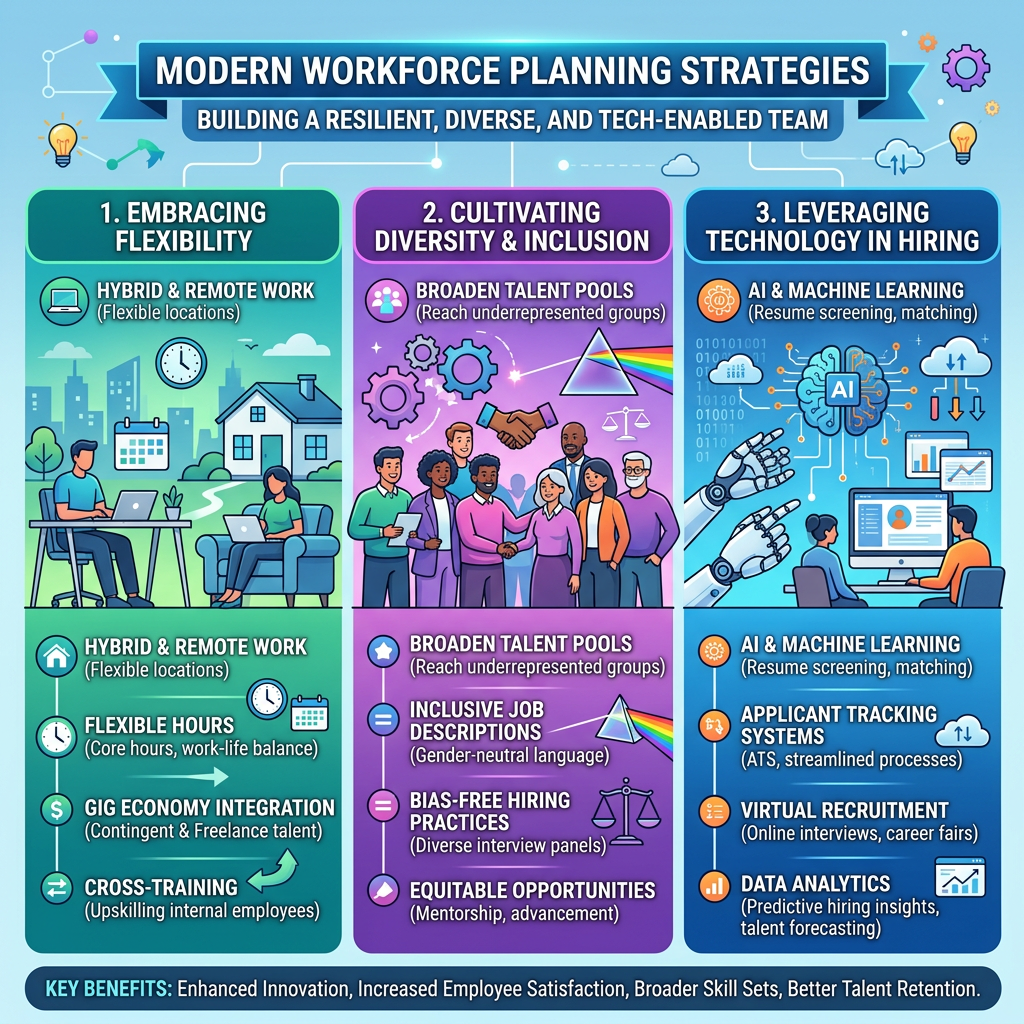
1. Remote Work and Flexibility
The rise of remote work has significantly changed how organizations approach workforce planning. A study by Eurofound revealed that 42% of the EU workforce now engages in remote work regularly. This shift requires companies to rethink their recruitment strategies to attract diverse talent from broader geographical areas. Flexible work policies not only help in attracting top talent but also enhance employee retention, which is crucial for long-term growth.
2. Embracing Diversity and Inclusion
Workforce diversity proves to have a direct correlation with business success. A McKinsey report indicates that companies in the top quartile for gender diversity are 21% more likely to outperform their peers in terms of profitability. As such, integrating diversity and inclusion into your workforce planning strategy will position your organization to benefit from varied perspectives and innovations.
3. The Role of Technology in Talent Acquisition
With the rise of artificial intelligence and data analytics, technology is reshaping how organizations plan their workforces. Technologies that offer predictive analytics can help HR professionals identify skills gaps and forecast future hiring needs. Implementing an Applicant Tracking System (ATS) can streamline the recruitment process, allowing HR teams to focus on strategic initiatives rather than administrative tasks.
Implementing Effective Workforce Planning Strategies
1. Conduct Skills Audits
One of the first steps in effective workforce planning is conducting a thorough skills audit. This process helps identify existing employee skills and highlights gaps relative to future business needs. Align these insights with your organization's strategic goals to develop targeted recruitment strategies aimed at talent acquisition.
2. Optimize Your Recruitment Strategy
Utilizing innovative recruitment strategies that capitalize on current hiring trends is essential. Explore flexible staffing solutions, such as temporary remote positions, to adapt quickly to market changes. Companies should also leverage various outreach channels—such as social media and online job fairs—to attract candidates from diverse backgrounds.
3. Explore Outsourcing Benefits
Outsourcing can be a vital component of workforce planning. It allows organizations to access specialized skills without the overhead costs associated with full-time staff. For example, outsourcing IT functions enables internal teams to focus on strategic initiatives while ensuring that technical needs are met efficiently. Additionally, employing external partners can also facilitate swift responses to fluctuating market demands.
4. Foster a Growth-Oriented Culture
Creating a culture that promotes ongoing learning and development prepares your workforce for the future. Encourage continuous skills development through training programs and mentorship opportunities. This investment in employee growth not only enhances skillsets but also increases employee engagement, leading to greater retention rates and productivity.
Conclusion: Preparing for the Future
In conclusion, long-term workforce planning is essential for sustainable growth in any organization, particularly within the European market. By employing strategic recruitment strategies, leveraging outsourcing benefits, and adopting technology-driven approaches, business leaders can effectively future-proof their teams. As you prepare your workforce for the future, remember that adaptability and foresight are key to navigating the challenges ahead, ensuring your organization remains competitive in an ever-evolving landscape.
Start today with these actionable strategies to build a resilient and agile workforce ready to meet the demands of tomorrow's business landscape.