Closing the Talent Gap: Adapting to Changing Skills Demands in Europe
By Mercier Team
Closing the Talent Gap: Adapting to Changing Skills Demands in Europe
The European job market is rapidly changing, with emerging technologies and shifting economic conditions driving a significant skills gap. As industries evolve, employers face the challenge of aligning their talent acquisition strategies with current and future skills demands. This blog explores how companies can close the talent gap, focusing on effective recruitment strategies, the benefits of outsourcing, and the importance of adapting to changing market conditions.
Understanding the Skills Gap in Europe
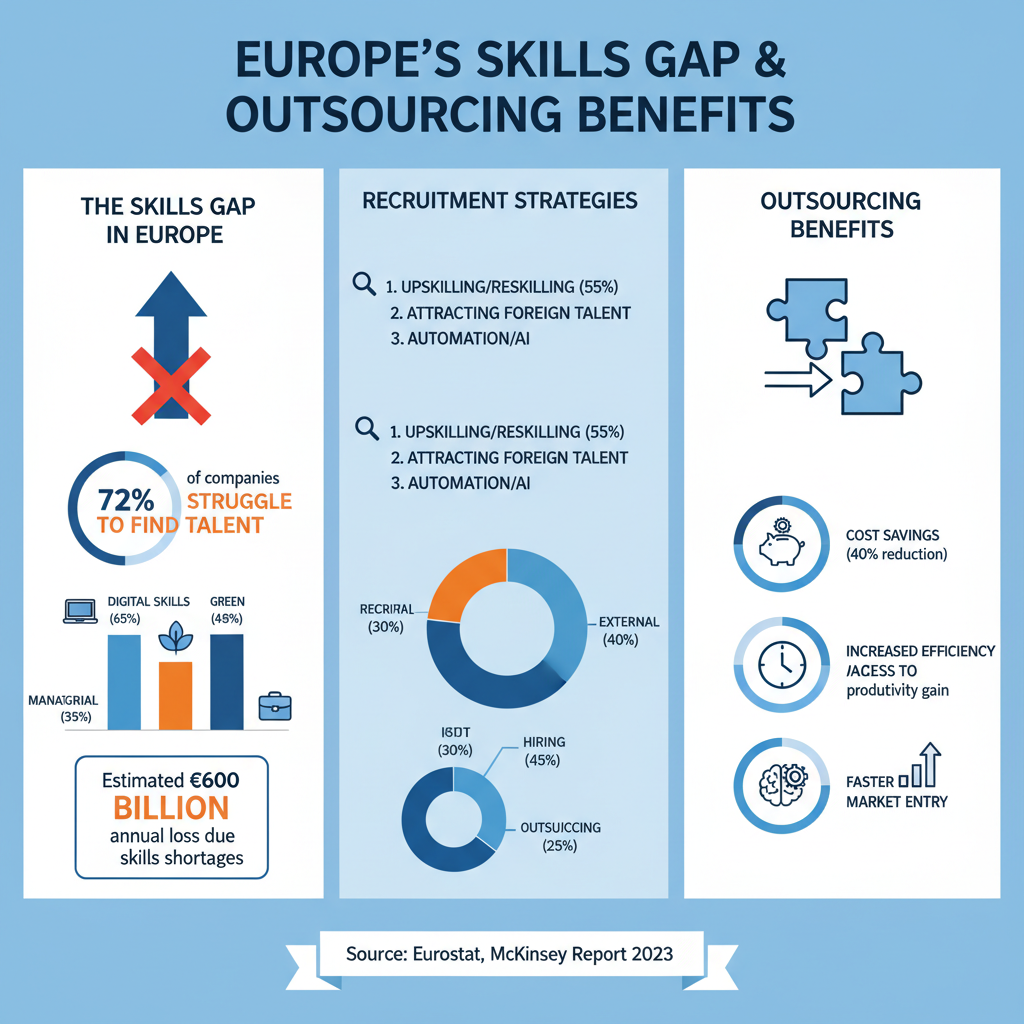
The skills gap refers to the disparity between the skills that employers require and those that job seekers possess. According to a recent study by the European Centre for the Development of Vocational Training (CEDEFOP), an estimated 29% of employers in Europe report difficulties in finding candidates with the right skills. This challenge is particularly pronounced in sectors such as technology, engineering, and healthcare, where specialized knowledge is critical.
Industry Trends Driving the Skills Gap
Several key trends are exacerbating the skills gap across European markets:
- Digital Transformation: As businesses increasingly adopt digital technologies, the demand for digital skills has surged, outpacing the existing talent pool.
- Remote Work: The COVID-19 pandemic accelerated the shift to remote work, requiring employees to adapt quickly to new communication and collaboration tools.
- Global Competition: Companies are not only competing for local talent but also facing global competition, increasing the pressure to enhance talent acquisition strategies.
Strategic Recruitment Strategies for Closing the Talent Gap
To address the skills gap, businesses must implement innovative recruitment strategies that resonate with both potential employees and the current market landscape. Here are several actionable approaches:
1. Develop Strong Employer Branding
Building a strong employer brand is crucial in attracting top talent. Companies should cultivate a workspace culture that emphasizes growth, learning, and inclusivity. Highlighting company values and success stories through social media and industry events can enhance visibility and make employer brands more appealing.
2. Invest in Upskilling and Reskilling
Companies can bridge the skills gap internally by investing in employee training programs. By offering development opportunities, businesses not only enhance their current workforce's skills but also demonstrate a commitment to employee growth—leading to increased retention and job satisfaction.
3. Leverage Data-Driven Recruitment
Utilizing analytics and data can streamline recruitment processes. By analyzing hiring patterns and performance metrics, HR professionals can make informed decisions regarding recruitment strategies and identify areas for improvement.
Outsourcing Benefits: An Effective Strategy
Outsourcing is an increasingly popular solution for addressing the skills gap in Europe. By tapping into external expertise, businesses can fill roles quickly and efficiently while focusing on their core operations. The benefits of outsourcing include:
Cost Efficiency
Outsourcing can significantly reduce costs associated with recruitment and training. Companies can allocate resources to strategic initiatives rather than administrative tasks, enhancing productivity.
Access to Global Talent
Utilizing international talent pools allows businesses to find specialized skills that may not be available locally, helping to fill critical gaps in their workforce rapidly.
Flexibility and Scalability
Outsourcing offers adaptability, allowing businesses to scale their workforce up or down based on project demands. This is particularly beneficial for companies undergoing business expansion or navigating unpredictable market conditions.
Conclusion: Embracing Change and Future-Proofing Talent Acquisition
Closing the talent gap requires a proactive approach to talent acquisition and strategic planning. By developing robust recruitment strategies and leveraging outsourcing benefits, companies in Europe can adapt to the changing skills landscape and position themselves for long-term success. Enhancing employer branding, investing in upskilling, and embracing data-driven insights will empower businesses to remain competitive. As industries evolve, those who prioritize talent development and adaptability will ultimately thrive in the European market.