Beyond Onboarding: Strategies to Retain Top Performers and Build Strong Organizational Culture
By Mercier Team
Beyond Onboarding: Strategies to Retain Top Performers and Build Strong Organizational Culture
In the fast-paced and ever-evolving European job market, attracting top talent is just the starting point. Effective talent retention strategies are crucial for maintaining organizational stability, enhancing productivity, and promoting a thriving workplace culture. As businesses adapt to new challenges, fostering an environment that encourages employees to stay has become a strategic priority.
The Importance of Retaining Top Talent
Statistics reveal the significance of talent retention. According to a 2022 report by the European Recruitment Association, organizations lose up to 50% of their top talent within the first two years of employment. This rapid turnover can lead to decreased productivity, increased recruitment costs, and disrupted team dynamics. By focusing on employee retention, businesses not only safeguard their investment in recruitment but also foster a culture of loyalty and resilience within their teams.
Strategic Approaches to Talent Retention
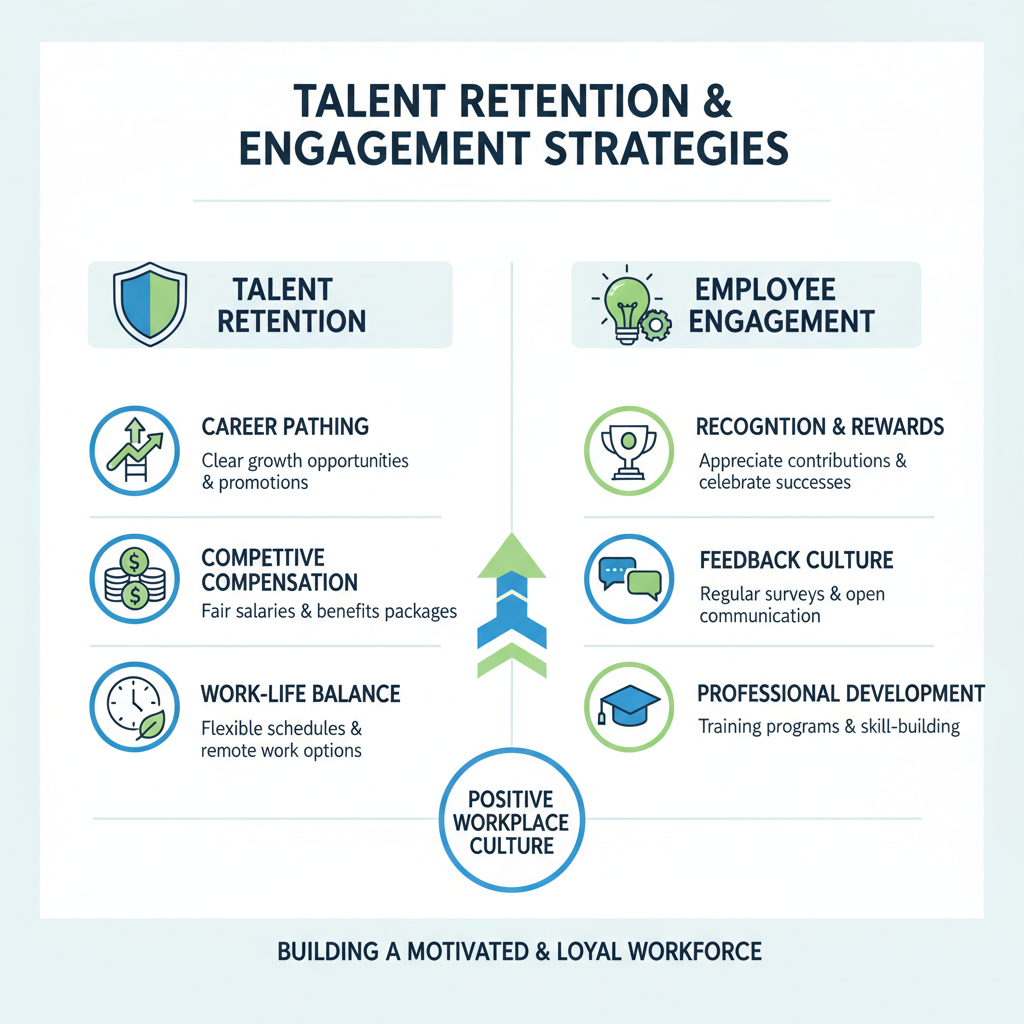
1. Cultivating an Engaging Organizational Culture
A strong organizational culture plays a pivotal role in talent retention. It shapes employee experiences and influences their commitment to the company. According to a survey by Deloitte, 94% of executives and 88% of employees believe a distinct corporate culture is important to business success.
- Foster Inclusivity: Create an inclusive workplace where employees feel valued and respected. Diversity initiatives not only enhance innovation but also encourage loyalty among employees.
- Encourage Collaboration: Promote a collaborative environment that breaks down silos. Open lines of communication across departments enhance engagement and facilitate a sense of belonging.
2. Offer Opportunities for Professional Development
Employees crave growth and development opportunities. Fostering continuous learning is essential for retaining high performers. Research from PwC shows that 79% of global workers say that they would stay longer at a company that invests in their careers.
- Tailored Development Programs: Customize training programs that align with both individual aspirations and organizational goals. This approach not only benefits the employee but also enhances overall business capacity.
- Mentorship Opportunities: Establish mentorship programs that connect less experienced employees with seasoned professionals. This provides invaluable guidance while helping to nurture future leaders within the organization.
3. Recognizing and Rewarding Contributions
Recognizing employee achievements is vital for retention. Acknowledgment can take various forms, from formal recognition programs to spontaneous praise. Data shows that companies with strong recognition programs experience a 31% lower voluntary turnover rate.
- Implement Recognition Platforms: Use technology to facilitate employee recognition. Platforms that allow peer-to-peer recognition create a culture of appreciation and camaraderie.
- Celebrate Milestones: Regularly acknowledge employee milestones, not just professional achievements. Celebrating personal accomplishments, such as work anniversaries, enhances emotional ties to the organization.
4. Leveraging Outsourcing Benefits
In the context of business expansion and changing market dynamics, outsourcing can be a strategic solution to address recruitment challenges and enhance talent retention. According to a 2022 report from the European Business Review, companies that leverage outsourcing effectively experience a 30% increase in talent retention.
- Focus on Core Strengths: By outsourcing non-core functions, companies can direct their attention towards talent retention initiatives that matter most, such as engagement and development.
- Access to Specialized Skills: Outsourcing allows organizations to access specialized services and expertise, relieving internal teams and enhancing overall employee satisfaction.
Concluding Thoughts
Retaining top talent is not merely about effective onboarding, but an ongoing commitment to nurturing a positive and enriching employee experience. By investing in a strong organizational culture, providing professional development opportunities, recognizing employee contributions, and leveraging staffing solutions through outsourcing, businesses can significantly improve talent retention rates.
As we move forward in a competitive European recruitment landscape, let's prioritize the strategies that create healthier, happier, and more productive workplaces. The value of a committed workforce cannot be overstated—it’s the backbone of sustainable success.